Dates
About Dates Fruit
1. Appearance –
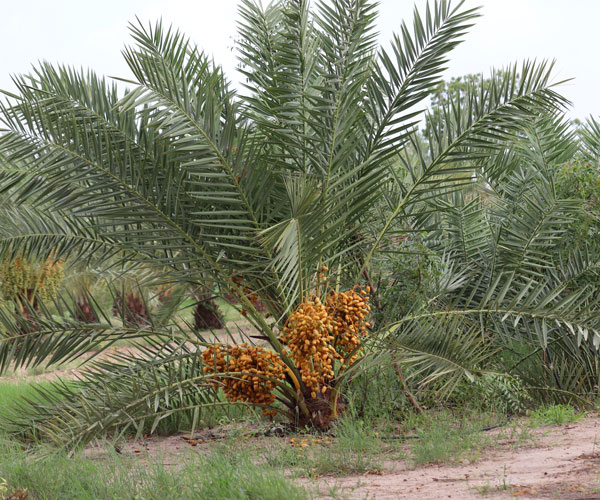
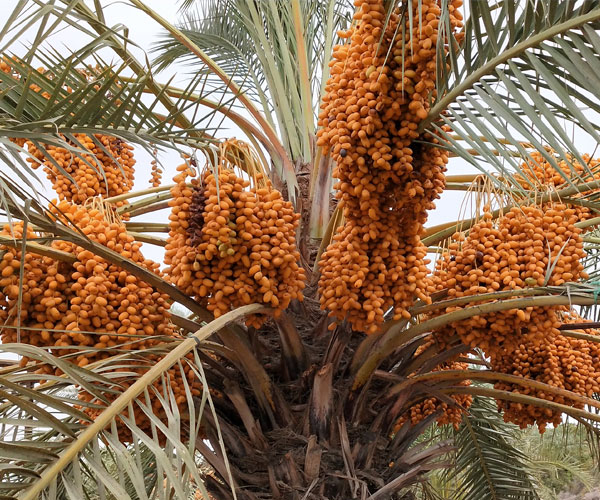
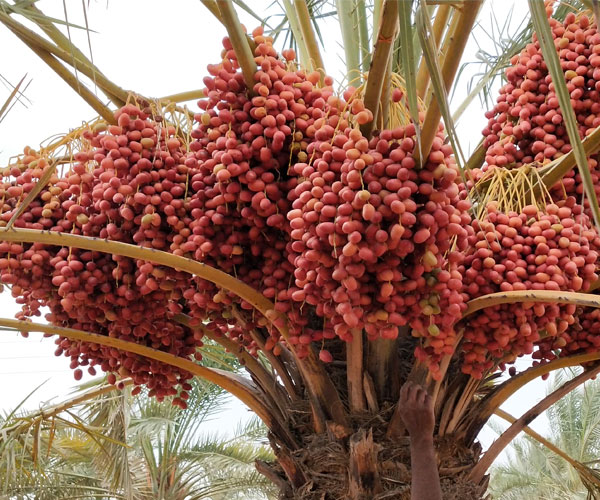
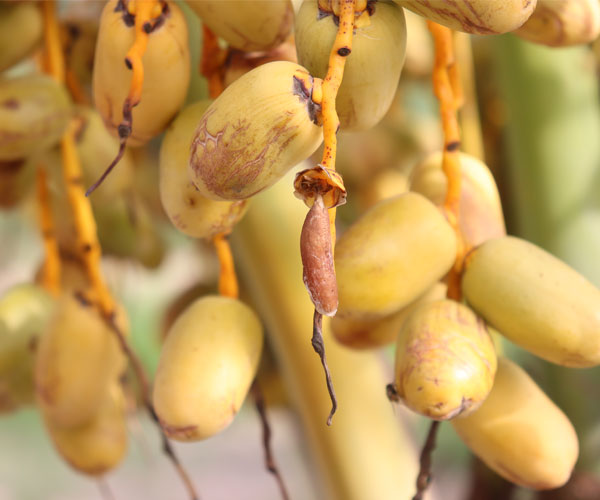
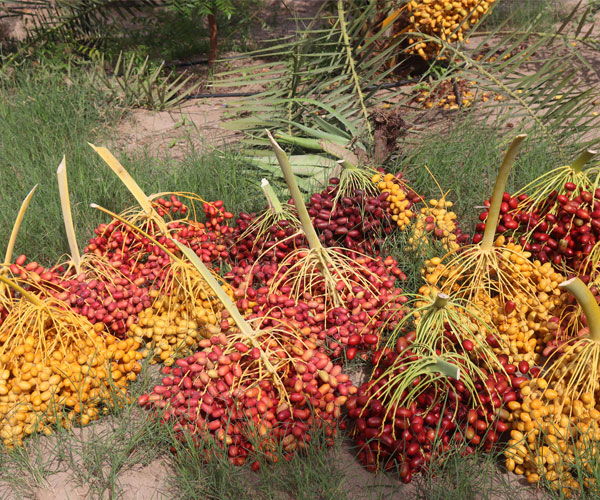
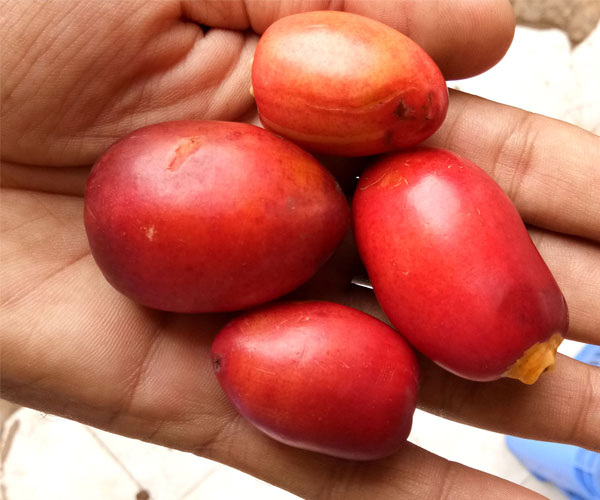
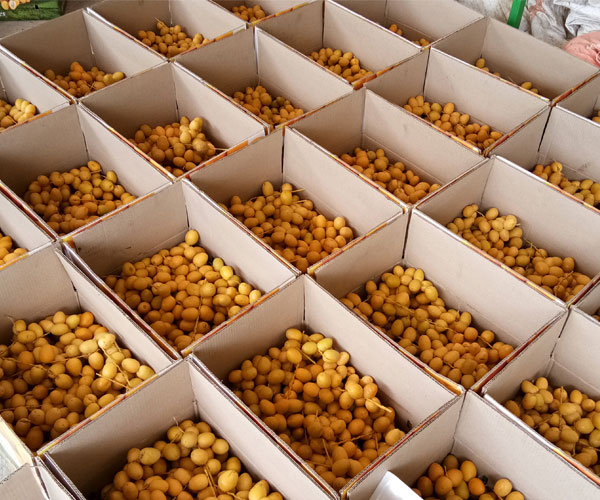
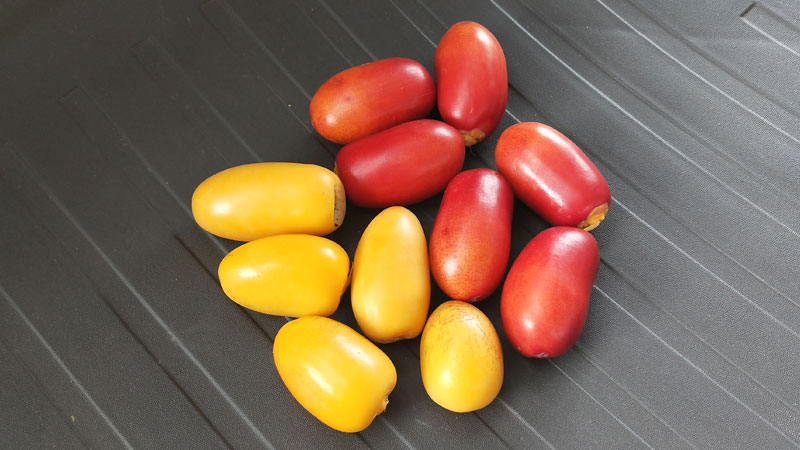
Dates are oval-shaped and vary in size, color, and texture depending on the variety. They can be small and dark brown to large, red and golden-yellow.
2. Taste –
Dates have a sweet, caramel-like flavor. The taste becomes more complex as the fruit ripens, Their natural sweetness makes them a popular ingredient in various desserts and sweets.
3. Culinary Uses –
Dates are used in a variety of culinary applications. They can be eaten fresh as a snack or incorporated into desserts, smoothies, salads, and cereals. Dates are often stuffed with nuts, cream cheese, or other fillings. Date syrup, date sugar, and date paste are also made from dates and used as natural sweeteners in cooking and baking.
4. Cultural and Religious Significance –
Dates have significant cultural and religious importance in many societies. They are often consumed during religious occasions and are a common food mentioned in various religious texts.
5. Harvesting and Storage –
Dates are harvested when they are ripe, which typically occurs in late summer or early fall, depending on the variety and region. Fresh dates should be stored in the refrigerator to maintain their freshness. Dried dates have a longer shelf life and can be stored at room temperature.
Overall, dates are not only delicious but also provide a range of health benefits, making them a valuable and versatile fruit in various culinary traditions around the world.
About Nutritional value of Dates Fruit and its health benefit
Nutritional Value of Dates (Per 100g serving):
– Calories : Around 282 kcal
– Carbohydrates : Approximately 75g
– Dietary Fiber : Roughly 7g
– Protein : About 2.5g
– Fat : Less than 1g
– Vitamins and Minerals :
-Vitamin B6 : 0.25mg (12% DV)
-Niacin (Vitamin B3) : 1.6mg (8% DV)
– Folate (Vitamin B9) : 15mcg (4% DV)
– Pantothenic Acid (Vitamin B5) : 0.8mg (8% DV)
– Vitamin K : 2.7mcg (3% DV)
– Iron : 0.9mg (5% DV)
– Potassium : 656 mg (14% DV)
– Magnesium : 54mg (14% DV)
– Copper : 0.4mg (18% DV)
Health Benefits of Dates:
1. Rich Source of Energy :
Dates are high in carbohydrates, providing a quick energy boost. They are often consumed by athletes to replenish energy levels.
2. High in Fiber :
Dates are an excellent source of dietary fiber, promoting digestive health. Fiber helps prevent constipation and promotes regular bowel movements.
3. Rich in Vitamins and Minerals :
Dates contain various vitamins and minerals, such as potassium, magnesium, and vitamin B6, which are essential for overall health and well-being.
4. Natural Sweetener :
Dates can be used as a natural sweetener in recipes instead of refined sugar. This makes them a healthier alternative, especially for those with a sweet tooth.
5. Digestive Health :
The soluble and insoluble fibers in dates aid in digestion. They also contain amino acids, which can help in digestion after a heavy meal.
6. Heart Health :
Dates are low in cholesterol and contain negligible fat. Additionally, the potassium in dates helps regulate blood pressure, reducing the risk of stroke and other heart-related diseases.
7. Bone Health :
Dates contain minerals like magnesium, manganese, and copper, which are essential for bone health and can help prevent conditions like osteoporosis.
8. Anemia Prevention :
Dates are a good source of iron, making them beneficial for people suffering from anemia.
9. Improves Skin Health :
The vitamins C and D in dates can help improve skin elasticity and reduce the appearance of fine lines and wrinkles.
10. Natural Remedies :
Dates have been used in traditional medicine for their potential medicinal properties, including as a remedy for sore throats, respiratory disorders, and even as a natural aphrodisiac.
It’s important to note that while dates offer numerous health benefits, they are also calorie-dense due to their natural sugars. Therefore, they should be consumed in moderation as a part of a balanced diet.
How can Dates fruit be used?
1. Snacking :
Dates can be eaten on their own as a nutritious and sweet snack. You can also stuff them with nuts or cheese for a more filling snack.
2. Smoothies :
Dates can be blended into smoothies to add natural sweetness and thickness. They pair well with banana, almond milk, and various other fruits.
3. Baking :
Dates are often used in baking to sweeten cakes, muffins, and cookies. They can be chopped and added directly to the batter or blended into a paste and used as a natural sweetener.
4. Energy Bars :
Dates serve as an excellent base for homemade energy bars. When blended with nuts, seeds, and other dried fruits, they create a nutritious and energy-boosting snack.
5. Sauces and Dressings :
Dates can be used to make sweet sauces and dressings. When blended with vinegar, oil, and spices, they can create a rich, sweet dressing for salads.
6. Stuffing :
Dates can be used as a stuffing for poultry dishes. When combined with nuts and spices, they create a flavorful stuffing.
7. Chutneys and Dips :
Dates can be cooked down into a chutney with spices and used as a condiment. They can also be blended into dips, especially in Middle Eastern cuisine.
8. Candy :
Dates can be made into a candy-like treat by stuffing them with nuts or coconut and then dipping them in chocolate.
9. Date Syrup :
Dates can be simmered in water and then blended into a syrup. This syrup can be used as a natural sweetener for pancakes, waffles, or desserts.
10. Stuffing for Vegetables :
Dates can be used as a stuffing for various vegetables, such as bell peppers or eggplants, adding a sweet and savory element to the dish.
11. Yogurt Parfaits :
Chopped dates can be used as a layer in yogurt parfaits, adding natural sweetness and texture.
12. Curries :
In some cuisines, dates are used in curries to add sweetness and depth of flavor.
Remember, when using dates in recipes, you might need to remove the pits and chop them finely or soak them in water to soften them, depending on the recipe requirements.
Production data of Dates plant
– Dates palm tree starts yield from 2 to 4 year : 20 kg to 50 kg per plant
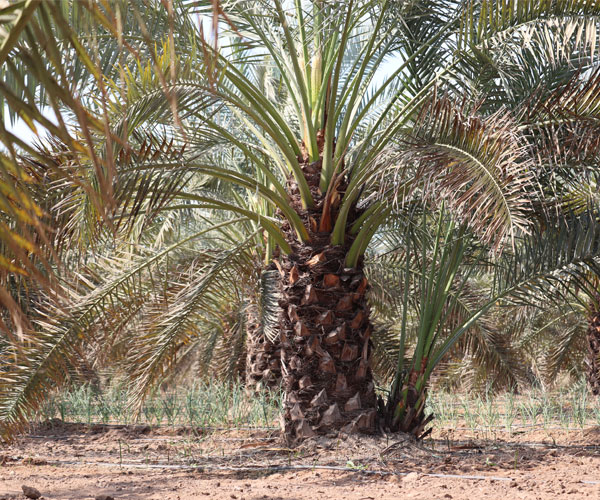
– full mature tree yield : 200 kg to 450 kg
What is Market scope of Dates in India
Domestic Consumption :
Dates are commonly consumed in India, especially during festivals and religious occasions. They are a healthy snack and are often used in sweets and desserts.
Export :
India also exports dates to various countries. The demand for Indian dates in the international market has been growing, and countries like the UAE, the USA, and the UK are significant importers of Indian dates.
Variety :
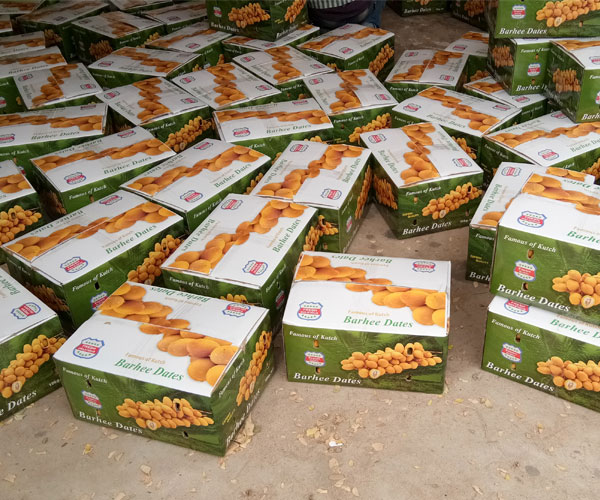
The market scope includes various types of dates, such as Medjool, Barhi, and Deglet Noor. Different varieties have different market segments and consumer preferences.
Processing and Value-Added Products :
Dates are used in the production of various value-added products like date paste, date syrup, and date bars. These products have a market both domestically and internationally.
Health Food Trend :
Dates are considered a healthy snack due to their natural sweetness and nutritional value. This has contributed to their market scope as a health food.
The market for dates in India is diverse and is influenced by cultural, dietary, and economic factors. It is important to note that the market conditions may have evolved since my last knowledge update in September 2021, so it’s advisable to consult more recent sources for the latest information on the market scope of dates in India.
What type of soil is suitable for the cultivation of Dates Fruit
1. Well-Drained Soil :
Date palms prefer well-drained soils, as they are susceptible to root rot if the soil remains consistently waterlogged. Sandy loam soils are often ideal for date palm cultivation because they provide good drainage.
2. pH Level :
Date palms thrive in slightly alkaline to neutral soils with a pH range of 7.0 to 8.5. They are sensitive to extremely acidic soils.
3. Salinity Tolerance :
Date palms are relatively salt-tolerant, which makes them suitable for soils with moderate to high levels of salinity. However, excessive salinity can still harm the plants, so it’s important to monitor soil salinity levels.
4. Organic Matter :
While date palms can grow in soils with lower organic matter content, adding organic matter to the soil can improve its fertility and water-holding capacity, which is especially beneficial in arid regions.
5. Soil Texture :
Sandy loam or sandy soils are preferred for date palm cultivation because they promote good drainage and aeration. However, date palms can also grow in clayey soils if proper drainage is ensured.
6. Soil Testing :
Conducting soil tests and Land Analytic report to assess the pH, salinity, and nutrient levels of the soil can help determine if any amendments are necessary to create the ideal conditions for date palm cultivation.
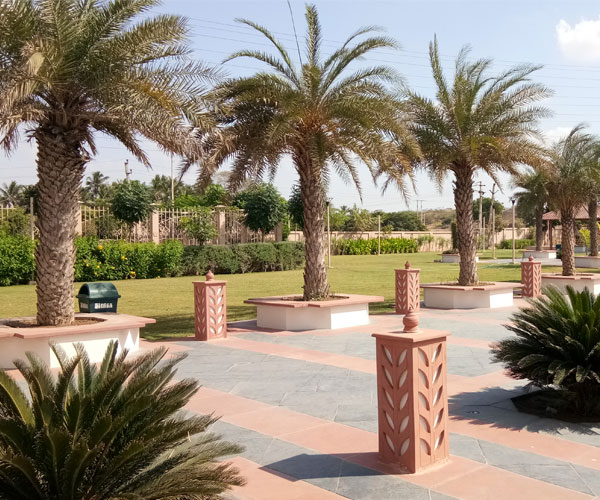
It’s important to note that date palms are long-lived and slow-growing trees, and they can take several years to start producing fruit.
– Proper care and maintenance, including pruning and fertilization, are essential to ensure healthy date palm growth and fruit production.
– Local climate and environmental factors should also be taken into consideration when planning a date palm orchard.
– Additionally, consulting with Organic clinic expert team can provide valuable insights into the specific soil requirements in your region.
What type of water is suitable for the cultivation of Dates Fruit
Environment criteria for Dates Fruit
1. Climate :
Dates thrive in hot, arid climates. They require a long, hot growing season with plenty of sunshine. They can tolerate high temperatures, but they also need a period of cool weather for the best fruit production. Dates are often grown in desert regions where temperatures can soar during the day but drop significantly at night.
2. Water :
Although dates are drought-tolerant, they do require a significant amount of water, especially during the growing season. However, excessive water can lead to diseases and root rot. Proper irrigation methods are crucial for date palm cultivation.
3. Pollination :
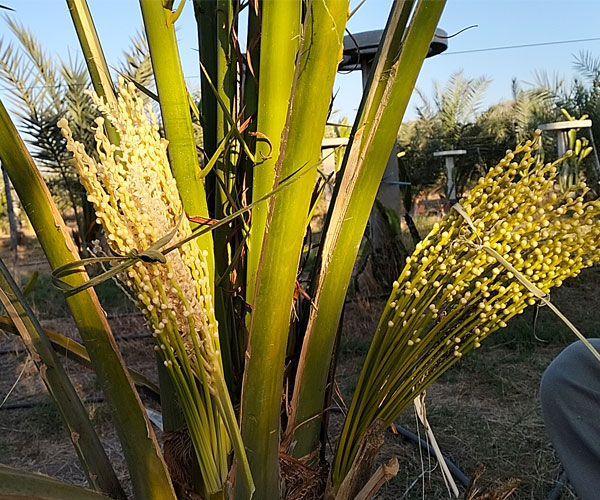
Most date palm varieties are dioecious, meaning they have separate male and female trees. Female date palms bear the fruit, but they need male palms nearby for pollination. but having both male and female trees increases the yield.
It’s important for date farmers to understand and manage these criteria carefully to ensure a successful harvest and high-quality fruit. Additionally, consulting with Organic clinic expert team can provide valuable insights into the specific soil requirements in your region.
Give information about the variety of Dates Fruit
Kutchi desi
Barahi
Red tissue culture 109
Medjul
Give information about Dates Fruit cultivation method
1. Choosing the Right Variety :
There are numerous varieties of dates, each with its unique taste, texture, and color. The choice of variety depends on the climate, soil, and purpose (whether for fresh consumption or for dried).
2. Climate and Soil Requirements :
Dates thrive in hot, dry climates. They require full sunlight and well-drained soil. Sandy loam or clay loam soils are preferred, as long as they have good drainage to prevent waterlogging.
3. Propagation :
Dates are propagated from seedling plant, offshoots plant and tissue culture plant (This method ensures that the desirable characteristics of the parent tree are maintained) that grow at the base of mature palms.
4. Planting :
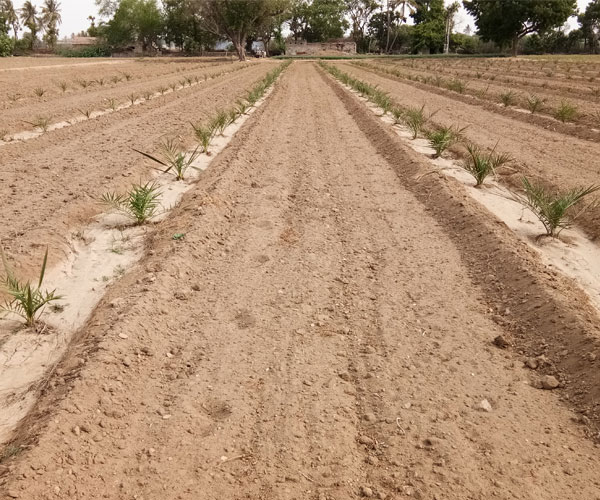
– Dig pits of appropriate size (1m x 1m x 1m) at a suitable distance (25 ft x 30 ft ).
– The pits should be filled with well-rotted farmyard manure or compost mixed with topsoil.
– Planting Depth : Plant the seedlings at the same depth as they were in the nursery bags or pots.
– Planting time Basal dose program
Prepare a good basal dose fertilizer program as per soil Testing report to maintain the amount of organic carbon while planting new crops, for more information you can contact the organic clinic team.
5. Irrigation :
Irrigation is crucial during the early stages of growth.
Date palms need a significant amount of water, especially during the growing season. Drip irrigation is commonly used in commercial date farms to conserve water and ensure efficient usage.
6. Mulching :
Apply a layer of organic mulch around the base of the date palms to conserve moisture, regulate soil temperature, and suppress weed growth.
7. Pollination :
Most date palm varieties are dioecious, meaning individual trees are either male or female. Female date palms produce fruit, but they require pollination from male palms to set fruit. Some growers introduce pollen manually to ensure a good yield.
8. Thinning and Pruning :
As the date palms grow, it’s essential to thin the fruit clusters. This practice allows the remaining dates to grow larger and ensures a better harvest. Pruning is also necessary to remove dead or diseased fronds.
9. Harvesting :
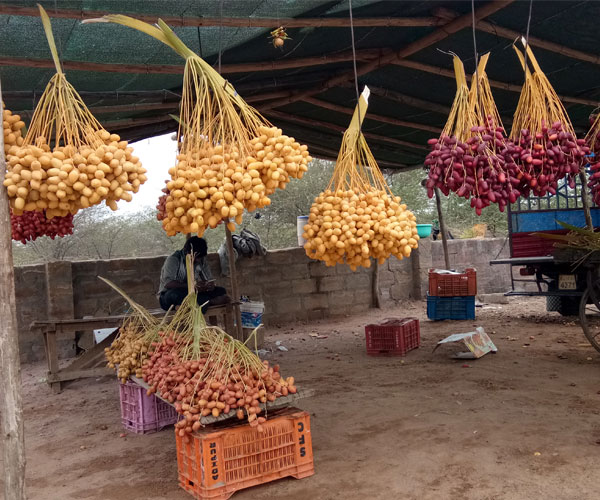
Dates are usually harvested when they reach their full ripeness. The exact time varies depending on the variety. Some dates are picked while still yellow and then ripen off the tree.
Successful date cultivation requires a combination of proper care, suitable climate, and good agricultural practices. Growers often need to protect their crops from pests and diseases, ensuring a healthy and bountiful harvest.
Remember, local climate and soil conditions can vary, so it’s always a good idea consulting with Organic clinic expert team can provide valuable insights into the specific soil requirements in your region
Plantation size
Seedling Plant : 5 ft * 20 ft = 430 plant per Acer
Male Seedling Plant for pollination : 5 ft * 20 ft
What is the pre-preparation of land for Dates Fruit cultivation ?
1. Site Selection :
– Choose a site with well-draining soil to prevent waterlogging.
– Ensure the site receives plenty of sunlight, as date palms require full sun for optimal growth.
2. Soil Testing :
– Conduct a soil test and Land Analytic survey to determine its pH, nutrient content, and drainage capabilities.
3. Clearing the Land :
– Clear the land of any existing vegetation, rocks, and debris.
– Level the ground properly to avoid water stagnation.
4. Irrigation System :
– Install an efficient irrigation system, such as drip irrigation, to ensure consistent and controlled watering.
– Date palms require regular watering, especially during dry periods.
5. Soil Preparation :
– Incorporate organic matter into the soil to improve its fertility and structure.
– Use well-rotted compost or manure to enrich the soil.
– Ensure the soil is loose and well-aerated to facilitate root growth.
By following these steps, you can establish a strong foundation for successful date fruit cultivation.
Remember, local climate and soil conditions can vary, so it’s always a good idea consulting with Organic clinic expert team can provide valuable insights into the specific soil requirements in your region.
What should be water management for Dates cultivation ?
– Dates trees need regular watering, especially during dry spells Use a drip irrigation system to provide a consistent water supply with proper schedule directed by the expert
– It’s good part of crop practice to take advice Organic clinic team for technical matter to irrigate Dates orchard during flowering and fruit stage
What should be fertilizer management for Dates cultivation ?
for fertilizer program as per Land Analytic report to maintain the sustainable growth and appropriate yield while performing crop practice, for more information you can contact the organic clinic team.
What should be Pest and Disease management for Dates cultivation ?
Red Palm Weevil :
Monitor with pheromone traps and treat affected trees with insecticides.
Date Palm Hopper :
Control weeds around date palms and use natural enemies like ladybugs and lacewings.
Bayoud Disease :
Practice strict quarantine measures and use disease-free planting material.
Fusarium Wilt :
Remove and destroy infected trees, and use resistant cultivars if available.
Palm Aphids :
Use insecticidal soap or neem oil to control aphid populations.
Date Palm Scale :
Prune affected fronds and apply horticultural oil or insecticidal soap.
By implementing a combination of these strategies, farmers can effectively manage pests and diseases in date palm cultivation, promoting healthy and productive date palm orchards.
Bagging of Fruit
Benefits of Bagging Dates Fruit :
– Pest and Disease Protection :
Bagging protects dates from pests, such as birds, insects, and rodents, as well as diseases, ensuring a higher quality yield.
– Weather Protection :
Bagging shields the dates from adverse weather conditions like heavy rain, wind, and dust, preventing physical damage and contamination.
– Cleaner Fruit :
Bagged dates are cleaner, making post-harvest processing and packaging easier.
– Uniform Ripening :
Bagging can help in uniform ripening of dates by protecting them from direct sunlight, allowing the fruits to ripen at a consistent rate.
– Reduced Need for Pesticides :
By physically protecting the fruit, bagging reduces the need for chemical pesticides, promoting environmentally friendly farming practices.
– Improved Marketability :
Bagged dates are often preferred in the market due to their cleaner appearance and reduced blemishes, leading to better market prices.
– Reduced Fruit Drop :
Bagging can prevent premature dropping of fruits, ensuring a higher yield at harvest time.
Remember that the effectiveness of bagging may vary based on the specific pests and diseases prevalent in the region. Farmers should choose the right type of bags and regularly inspect and maintain them to reap the full benefits of this technique.
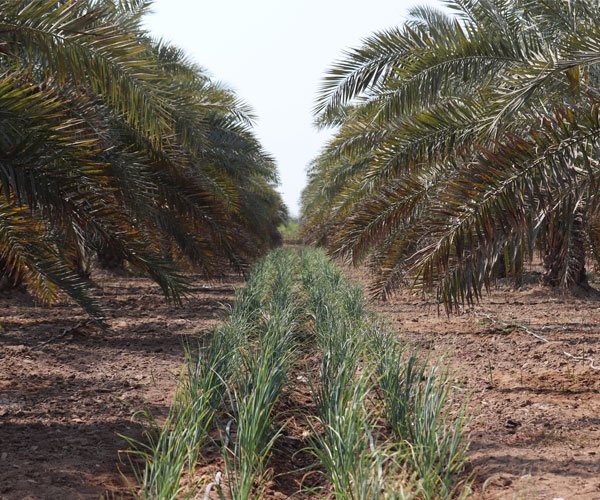
What can be intercropped with dates cultivation ?
1. Legumes :
Leguminous crops like chickpeas, lentils, or beans can be intercropped with date palms. They help fix nitrogen in the soil, which can improve the soil’s fertility.
2. Fruit Trees :
Some fruit trees like pomegranates or citrus trees can be intercropped with date palms, as they have similar water and nutrient requirements.
3. Vegetables :
Crops like cucumbers, tomatoes, or okra can be grown between date palm trees. These shorter-duration crops can provide additional income.
4. Herbs and Spices :
Herbs such as coriander, mint, or fenugreek can be intercropped with date palms. These high-value crops can be grown in the shaded areas between the date palms.
5. Fodder Crops :
Forage crops like alfalfa can be grown around date palm plantations to provide feed for livestock.
6. Cover Crops :
Cover crops like clover or alfalfa can help protect the soil from erosion and improve soil health.
7. Nurse Crops :
Fast-growing, short-duration crops can be used as nurse crops to provide shade and protection for young date palms in their early years.
When intercropping with date palms, it’s essential to consider the water and nutrient requirements of the companion crops, as well as their compatibility with the date palm’s root system. Proper management practices are necessary to ensure that all crops thrive in the same field without competing too heavily for resources.
What should be considered in post-harvest management ?
1. Storage :
Proper storage facilities are essential to protect crops from pests, moisture, and temperature fluctuations.
2. Handling :
Gentle handling minimizes damage to produce, reducing losses.
3. Packaging :
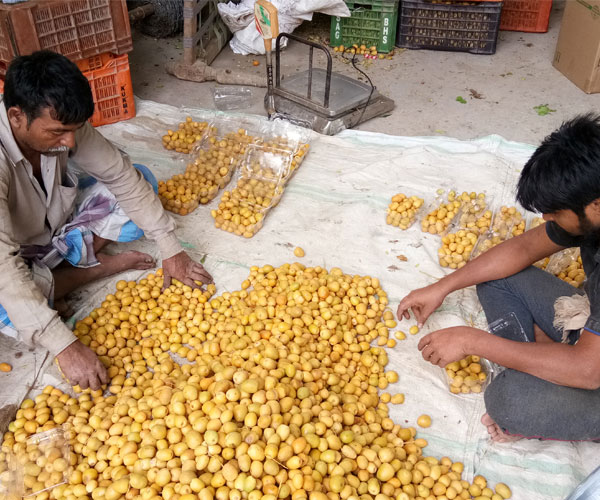
Choosing appropriate packaging materials and methods helps maintain product quality.
4. Transportation :
Efficient transportation ensures timely delivery and minimizes damage.
5. Quality control :
Regular quality checks help identify issues early and maintain product integrity.
6. Moisture control :
Maintaining the right moisture levels is crucial to prevent mold and decay.
7. Pest and disease management :
Implement pest control measures to prevent infestations.
8. Temperature control :
Controlling temperature can extend the shelf life of perishable goods.
9. Cleaning :
Properly cleaning and sanitizing equipment and storage areas is vital to prevent contamination.
10. Marketing :
Identifying target markets and marketing strategies to sell products effectively.
11. Value addition :
Processing or packaging products in ways that add value can increase profits.
Consider these factors based on the specific type of crop and local conditions for effective post-harvest management.
What are the risks in the cultivation of Dates Fruit ?
1. Climate Sensitivity :
Date palms are sensitive to climate conditions. Extreme heat, frost, or heavy rainfall can damage the crops. Changes in climate patterns can affect the yield and quality of dates.
2. Pests and Diseases :
Date palms are susceptible to various pests and diseases. Insects like date palm hoppers and diseases like Bayoud disease can significantly impact the production. Controlling these pests and diseases requires constant monitoring and timely interventions.
3. Soil Salinity :
Date palms are relatively salt-tolerant, but excessive soil salinity can still affect their growth. High salinity levels in the soil can lead to poor yield and stunted growth.
4. Water Scarcity :
Date palms require a significant amount of water for proper growth. In regions where water is scarce, date cultivation can put pressure on local water resources. Efficient irrigation methods and water management practices are essential to mitigate this risk.
5. Pollination Issues :
Date palms are dioecious, meaning there are separate male and female trees. Proper pollination is crucial for fruit production. Farmers need to ensure that there are enough male trees in the vicinity of female trees for successful pollination.
6. Labor Intensive :
Date cultivation is labor-intensive, especially during the harvesting season. Finding an adequate workforce for harvesting can be a challenge, especially in regions where labor is scarce or expensive.
7. Market Fluctuations :
The market for dates can be volatile. Fluctuations in demand and prices can affect the income of date farmers. Diversification of products and markets can help mitigate this risk.
8. Land Degradation :
Continuous cultivation without proper soil conservation practices can lead to land degradation. Soil erosion and loss of soil fertility are significant concerns in date cultivation.
9. Competition with Other Crops :
In some regions, date cultivation competes with other essential crops for resources such as water and land. Balancing different agricultural activities is essential to maintaining agricultural sustainability.
10. Regulatory Challenges :
Compliance with regulations related to agricultural practices, water usage, and environmental conservation can pose challenges to date farmers, especially in areas with stringent regulations.
To mitigate these risks, date farmers often employ sustainable agricultural practices, invest in research and technology, and diversify their income sources. Proper planning, irrigation management, pest control, and market analysis are crucial for successful and sustainable date cultivation.
Picture Gallery